
Village in the Shade Multiplayer Guide: Co-op, Online Features, and Solo Play
Village in the Shade is listed as a single-player game, with no announced shared-farm, split-screen, or online co-op mode in the checked official feature list.
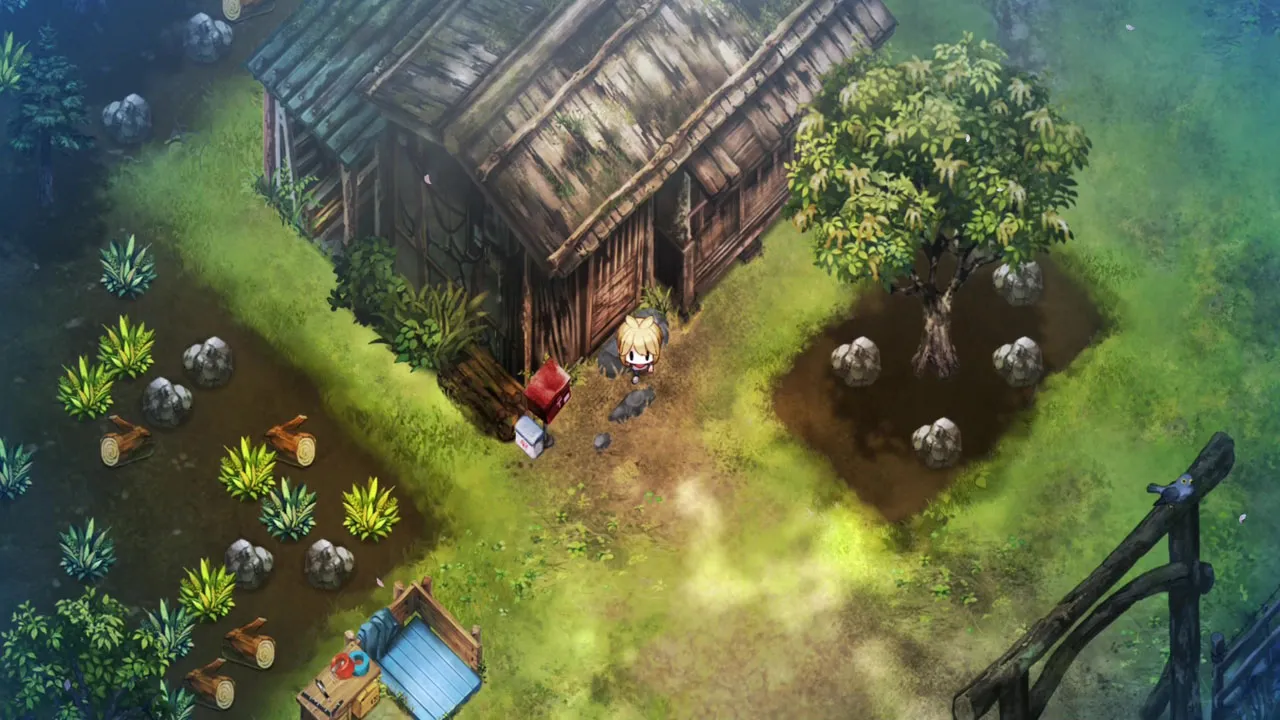
Is Village in the Shade multiplayer?
Village in the Shade multiplayer support is not available. The game is designed as a single-player farming and psychological horror experience, so there is no online co-op, local multiplayer, split-screen mode, or shared farm system.

Village in the Shade Launch Trailer - (Nintendo Switch, Nintendo Switch 2, PlayStation 5, and Steam) · NIS America
Official launch trailer used as general reference for the 2026 original game. It is not a dedicated tutorial, a hardware test, or proof of a specific mechanic, patch, translation, price, or demo.
Cover context: Official cottage and farm screenshot; general game context, not multiplayer footage.
That matters because Village in the Shade multiplayer searches often come from players comparing the game with Stardew Valley, Fields of Mistria, or other farming sims that support mods or multiplayer features. While Village in the Shade offers farming, crafting, exploration, friendship, festivals, and homestead customization, its story and supernatural events are intended for one player.
The game is available on Steam, Nintendo Switch, Nintendo Switch 2, and PlayStation 5. The official Village in the Shade Steam page lists the game’s feature set as single-player and includes Steam Cloud, Remote Play on TV, achievements, and controller support.
| Feature | Available? |
|---|---|
| Online multiplayer | No |
| Local co-op | No |
| Split-screen play | No |
| Shared farm | No |
| Multiplayer mods | No confirmed support |
| Single-player campaign | Yes |
| Steam Cloud | Yes |
| Remote Play on TV | Yes |
What does single-player mean in Village in the Shade?
Village in the Shade is built around the idea of living alone in Kagatsu, a quiet Japanese mountain village with unsettling rules. During the day, you cultivate crops, raise animals, improve your farm, befriend villagers, attend seasonal activities, and uncover new crafting options.
At night, the game changes dramatically. Supernatural encounters, strange creatures, hidden objects, and environmental puzzles turn the village into a dangerous place to explore. This day-and-night contrast is central to the experience, which is one reason the game does not feel like a standard multiplayer farming simulator.
The single-player structure also lets the game control its pacing. Dialogue scenes, discoveries, and horror encounters can happen without needing to accommodate another player’s progress or decisions.
| Daytime activity | Nighttime activity |
|---|---|
| Plant and harvest crops | Investigate supernatural events |
| Feed and care for animals | Search for hidden objects |
| Fish and forage | Avoid or counter hostile spirits |
| Craft tools and machines | Solve encounter-specific puzzles |
| Decorate and expand the farm | Explore areas affected by the Shade |
| Build friendships | Learn clues from books and environments |
Can you play Village in the Shade with friends?
Not directly. You cannot invite friends into your farm, visit another player’s village, or complete the story cooperatively. Every save file belongs to one player, and progression is not designed to synchronize between multiple users.
However, the game can still be enjoyable as a shared viewing experience. A friend can watch you play, help interpret clues, or take turns during exploration. This is not official co-op, but it can make the game feel more social.
Remote Play is not multiplayer
The Steam listing includes Remote Play on TV, but this should not be confused with multiplayer. Remote Play on TV allows you to stream your own game to a compatible television or device. It does not add cooperative gameplay or create a second playable character.
| Feature | What it actually does |
|---|---|
| Remote Play on TV | Streams your game to another compatible screen |
| Steam Cloud | Synchronizes your save data across supported devices |
| Steam achievements | Tracks personal milestones |
| Controller support | Allows play with compatible gamepads |
| Family Sharing | May allow access under Steam’s sharing rules, but not simultaneous co-op |
Community reports may mention playing while a friend watches or using Remote Play to display the game elsewhere. Treat those as player experience, not evidence that the game has multiplayer functionality.
How does Village in the Shade compare with multiplayer farming sims?
If your priority is cooperative farming, Village in the Shade may not be the best fit. Its strengths are its atmosphere, story, hand-painted visuals, and horror mechanics rather than shared-world gameplay.
The farming systems are also more streamlined than those in Stardew Valley. You can grow crops, raise livestock, process goods, fish, cook, and expand your farm, but the game puts more emphasis on narrative discovery and nighttime exploration.
| Game | Multiplayer | Main appeal | Horror elements |
|---|---|---|---|
| Village in the Shade | No | Story-driven farming horror | Strong |
| Stardew Valley | Yes | Deep farming and life simulation | Minimal |
| Fields of Mistria | No confirmed co-op | Relationships, decorating, and farming | None |
| Story of Seasons: Grand Bazaar | No confirmed co-op | Traditional farming and trading | None |
| Animal Crossing: New Horizons | Limited online visits | Decorating and social island play | None |
Players coming from Stardew Valley should expect fewer relationship systems and no marriage or children in Village in the Shade. The player character is presented as a child, and the game focuses on friendships rather than romance.
That difference is important when deciding whether to buy. If you are searching specifically for Village in the Shade multiplayer, you may be disappointed. If you want a solo farming game with an unusual horror story, the lack of co-op is less significant.
Tips for enjoying Village in the Shade solo
The absence of co-op does not mean the game lacks long-term content. A player can spend dozens of hours improving the farm, completing the story, filling the encyclopedia, unlocking crafting recipes, and investigating nighttime encounters.
One gameplay session described by a player with roughly 50 hours of experience included farm expansion, animal care, rice cultivation, silk production, fishing, cooking, crafting, and supernatural exploration. That is player experience, not a guaranteed completion time, but it gives a useful indication of the game’s scope.
1. Choose Shade Mode for the full experience
Village in the Shade includes a less frightening option called Sunshine Mode. It can be useful if you dislike jump scares or atmospheric horror, but it reduces much of what makes the game distinctive.
Shade Mode includes the darker nighttime encounters, creepy visual effects, pursuit sequences, and supernatural puzzles. Choose Sunshine Mode if you primarily want a relaxing farming game; choose Shade Mode if you want the intended combination of cozy simulation and horror.
| Mode | Best for | What to expect |
|---|---|---|
| Shade Mode | Horror fans and completionists | Full nighttime gameplay and supernatural encounters |
| Sunshine Mode | Players who dislike scares | A gentler, less frightening experience |
| Either mode | Farming and decorating fans | Crops, animals, crafting, and farm upgrades |
2. Organize storage early
Storage can become difficult to manage once you collect seeds, crops, animal products, minerals, furniture, crafting materials, and nighttime items. Create separate chests before your inventory becomes overloaded.
A practical organization system looks like this:
- Seeds and fertilizer
- Crops and vegetables
- Fruits and tree products
- Animal products
- Fish and hunting materials
- Wood and charcoal
- Stone and mineral resources
- Fences, paths, and decorations
- Nighttime items and special materials
- Prepared meals and cooking ingredients
This is especially useful in a single-player game because you cannot rely on another player to manage a separate inventory or bring missing resources to the farm.
3. Plan long-growing crops
Some crops take much longer to mature than standard vegetables. Rice, for example, requires careful planning and can occupy a field for multiple seasons, according to player experience.
Before planting, check:
| Question | Why it matters |
|---|---|
| How many days does the crop need? | Prevents planting too late in a season |
| Is it harvestable more than once? | Helps estimate field value |
| Is it needed for a quest or evaluation? | Avoids accidentally selling important items |
| Can it be processed? | Determines whether machines improve its value |
| Does it require a special field or paddy? | Helps plan your farm layout |
Do not plant huge quantities of low-value crops simply because they are easy to grow. Some repeat-harvest crops produce large amounts but sell for relatively little, while processing machines may be better used for more valuable ingredients.
4. Use the ducks to maintain rice paddies
Rice paddies can develop weeds, but ducks can help consume them. This creates a useful connection between animal care and crop maintenance.
Keep paddy areas near the duck enclosure when possible. Fences are primarily decorative, so you do not need to build a rigid barrier around every animal. Instead, use fences and paths to make the farm easier to navigate while leaving enough room for animals to access their food.
5. Prepare before exploring at night
Nighttime exploration can drain health and leave you far from home. Bring food, avoid wasting stamina during the day, and learn how each supernatural encounter works.
Helpful preparation includes:
- Carrying several healing meals
- Keeping your tools upgraded
- Leaving room in your inventory
- Recording clues from books and notes
- Learning where hiding spots are located
- Returning home before the morning deadline
- Avoiding unnecessary nighttime detours
Different encounters may require different responses. Some enemies can be avoided, while others involve lanterns, flashlights, watering tools, or ranged equipment. Community reports describe using bushes to hide from certain pursuers and using light to reveal special targets. These are community reports, so mechanics may change after updates.
Is Village in the Shade worth buying without multiplayer?
That depends on what you want from a farming game. The lack of Village in the Shade multiplayer is a major drawback if you planned to share a farm with friends. There is no official co-op workaround, and Remote Play does not change that.
For solo players, the game offers a distinctive combination of features:
- Hand-painted Japanese countryside visuals
- Farming, fishing, foraging, and animal care
- Farm expansion and customization
- Crafting machines and skill progression
- Friendship events and village conversations
- Seasonal activities
- A mystery-focused story
- Atmospheric horror and nighttime exploration
- More than 50 Steam achievements
The Steam store lists the standard edition at $49.99 and marks the game as “Very Positive,” with 91% of 670 all-time Steam user reviews positive at the time of reference collection. Store ratings can change, but the response suggests that many players enjoy the game despite its single-player design.
| Buy Village in the Shade if you want… | Consider another game if you want… |
|---|---|
| A solo farming adventure | Online co-op farming |
| A horror story with cozy elements | A purely relaxing simulation |
| Farm customization | Romance and marriage systems |
| A mystery to uncover | Competitive multiplayer |
| Atmospheric exploration | A large open-world sandbox |
| A long completionist checklist | A short, story-only experience |
Village in the Shade multiplayer FAQ
Does Village in the Shade have multiplayer?
No. Village in the Shade multiplayer features are not available. The game supports single-player gameplay only, with no online co-op, local multiplayer, split-screen, or shared farms.
Can two people play Village in the Shade on Steam?
Two people cannot play simultaneously as separate characters. Steam features such as Remote Play on TV and Family Sharing do not add multiplayer functionality.
Is Village in the Shade similar to Stardew Valley multiplayer?
Both games include farming, fishing, crafting, animals, and farm upgrades. However, Stardew Valley supports multiplayer, while Village in the Shade is single-player and places much more emphasis on horror, mystery, and nighttime exploration.
Will Village in the Shade get multiplayer later?
There is no confirmed multiplayer announcement in the available official information. Unless the developer or publisher announces a multiplayer update, treat the game as a single-player title.
Related guides
Media sources
Related Articles
community
Village in the Shade Discord: Publisher and Player Communities
NIS America’s Discord is a publisher community that can help you find other Village in the Shade players.
community
Village in the Shade Official Website and Store Links
The official English Village in the Shade website is operated by NIS America, with a separate Japanese site from Nippon Ichi Software.
community
Village in the Shade Reddit: Reviews, Help, and Spoiler Etiquette
Reddit discussions can help you compare player impressions of Village in the Shade, but they are not official patch notes.
Was this helpful?
Thanks for the feedback!